North Macedonia is a small country, but it certainly packs a punch.
It’s capital Skopje – a bizarre mix of modern bling and Ottoman splendour – is worth a quick visit, but the UNESCO listed, lake town of Ohrid is the real draw.
Here’s how to see both in 36 hours:
Unless you are driving to Ohrid from Albania – just half an hour away by car – you will probably arrive in Skopje. We are basing this itinerary on arriving in the capital.
Day 1 evening: Skopje
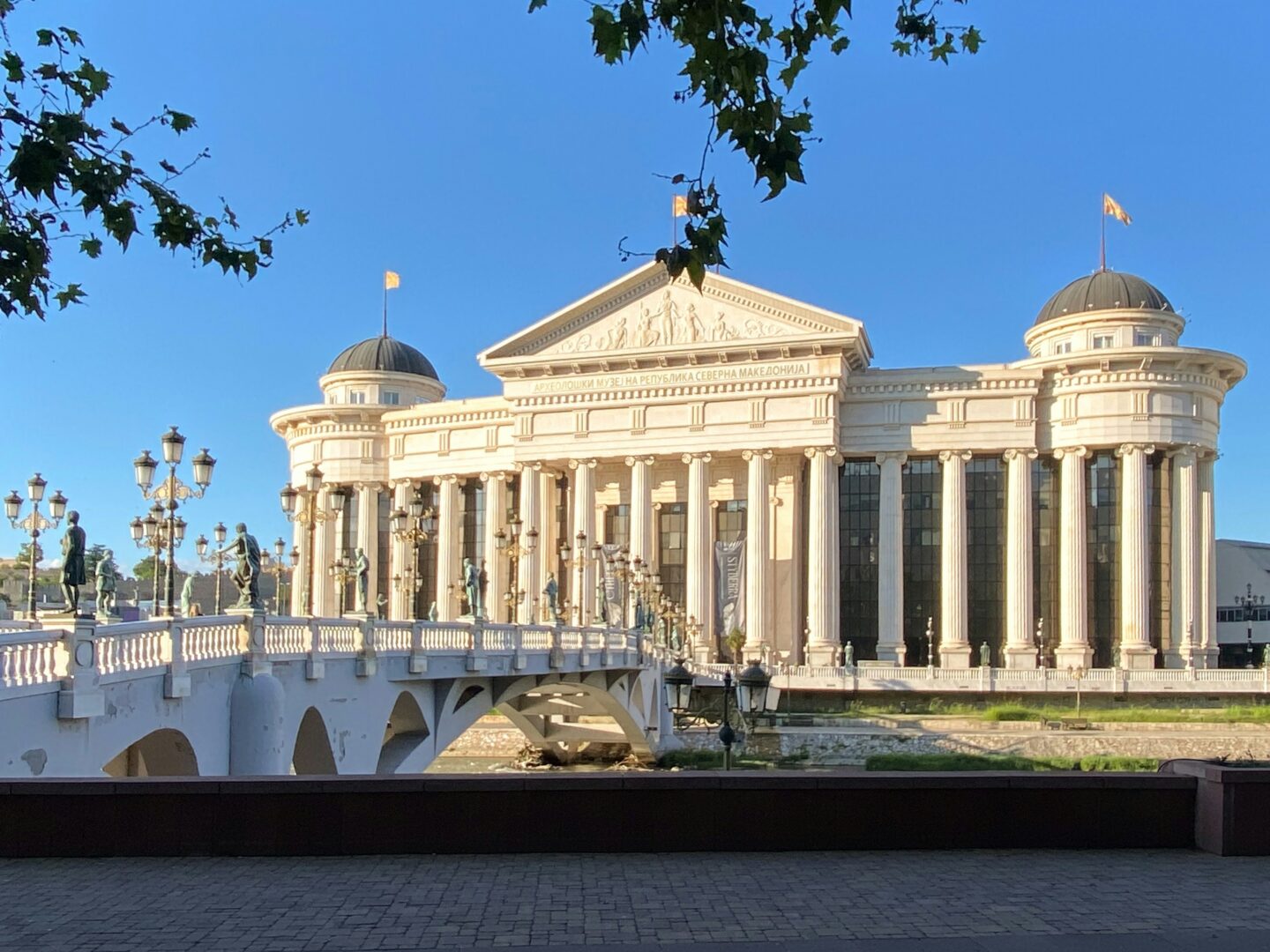
Explore the shiny new Macedonia Square, the modern heart of Skopje. This huge square, frames the gigantic statue of Alexander the Great and is surrounded by cafes, bars and fast food joints. Off the square are several notable sights including the beautiful 15th century stone bridge – Kameni Most – linking the modern side of the city with the Ottoman Bazaar (more of this later). Walk along the riverfront to take in the views of the Kale Fortress and the floodlit modern buildings on the banks of the Vardar. The statue studded Bridge of Art provides the best viewpoint.
Day 2 Morning:
Get up early and head to the bus station – it’s worth grabbing breakfast and coffee en route as choice is limited at the station. Regular buses leave for Ohrid and the journey takes roughly 3 and a half hours. Most buses take a service station stop – where there’s a shop and cafe with a sweet and savoury pastries.
It’s a long journey, but trust us, it’s worth it. The arrival into the modern town of Ohrid may disappoint, but the minute you get to the lake front the magic will draw you in.
Lunch: Ohrid
There’s huge selection of cafes and eateries fringing the lakefront – ranging from modern to traditional. Most have great views of the lake and the Albania hills beyond. As you follow the waterfront into the old town, it becomes quieter. We found the further you go from the main jetty, the more relaxing and authentic the eateries will be.
Our tip is to lunch at Restaurant Kajiche down an alleyway and right on the lake. Relax and recover and take in the gorgeous views.
Afternoon:
Ohrid is packed with incredible churches. Allegedly, there used to be one for every day of the year. As the old town is set across a steep hill, we suggest a circular route or you will be repeatedly zig zagging up and down all afternoon.
From tiny byzantine chapels to larger fresco filled cathedrals there’s endless choice, but the following are our must sees:
Start at the imposing Church of Hagia Sophia in the lower town. It’s been rebuilt and repurposed many times since the 6th century BC. The current structure dates to 11th century and the interior is decorated with jewel coloured frescoes from the 11th to the 13th centuries.
After your visit, wind your way upwards. You can follow your own route up steps or streets lined with typical Ottoman houses – no route will be ugly, but aim for the Upper Gate in the 10th century city walls. To the right of this you find the exquisite Church of St. Mary Peribleptos. This 13th century gem is our favourite: quiet and atmospheric with exceptional frescoes. Don’t miss it.
Next walk back to the impressive city walls and follow them west to Samuel’s Fortress. It has been extensively restored, but dates back to 900. The views over the lake are unbeatable.
Next you can double back and take in the Ancient Macedonian Theatre of Lychnidos. It dates back to 200 BC and is free. It’s worth saying that the signposting in this area is bad, so we used google maps.
After the fortress, drop down past Plaoshnik Archaeological Park which includes St Clement’s Church. The site is interesting if you’ve time, but the church is in fact a fine reconstruction of previous sites of worship and there are better frescoes elsewhere in Ohrid.
Finally, Ohrid’s (and Macedonia’s) iconic, picture perfect church – The Church of Saint Jovan the Theologian at Kaneo. It’s perched on an outcrop overlooking the lake and is quite magnificent. Small with an ornate interior coated in sublime frescoes. However, the church is a tourist magnet so we suggest, sitting down and taking in the view until there’s a lull in the tourist groups.
Evening:
By now, the sun should be lowering or setting. So take time to admire the light on the lake, then descend to the scenic boardwalk over the water back into town. There’s a selection of bars and restaurants along the lakeside path – many down alleyways and in nooks and crannies – so take your pick.
After dinner, we suggest wandering in the heart of the old town, as Ohrid is lit with glowing traditional lamps at night.
Our tips – keep looking up there’s a lot of typical Ottoman architecture on show.
Stay at Villa Varosh. It’s right in the centre of the old town and has stylish rooms with balconies, plus friendly staff and free snacks (including fruit, cookies and soup) and hot drinks.
Day 3 morning: the lake
We suggest breakfast next to the jetty and hitting the lake.
There are numerous options available. Obviously, you could easily spend a week relaxing in and exploring the area round Ohrid, but on this whirlwind tour we suggest a scenic cruise to Sveti Naum Monastery, 25 kilometres away near the Albanian border.
There are beautiful views of the lake throughout; and some cruises stop at the Bay of Bones Museum. The beautiful Byzantine monastery dates back to 905 and was later dismantled and rebuilt in the 16th century. It’s famous for its structure, icons and wood carving. Depending on timing, you could take a bus back or return in a more leisurely manner by boat.
Lunch:
Either have a quick bite back in Ohrid, or grab a picnic from the fruit and vegetable market in the new town and begin your bus journey back to Skopje.
Early evening: Skopje Bazaar
Try and base yourself in the Old Bazaar on the north banks of the Vardar for your last night in Skopje.
The Turkish bazaar is a delightful maze of shops, courtyards and cafes that repays endless wandering. Our highlights include: the imposing hill top Kale Fortress; the spectacular National Gallery located an ancient hamman complex; the three Ottoman 15th century caravaserais (Suli Han, Kapan Han and Kursumli Han); finally the Ishak Bey Mosque built in 1438.
Some of the above may be closed, but can be visited in the morning before you depart.
Our final tip: eat at Destan a good value, historic barbeque cafe with delicious food.